

Expanding a sushi business requires more than simply increasing output. Scaling smoothly demands careful planning, the right tools and a focus on maintaining quality and consistency at every stage. Below are the core elements every sushi restaurant should consider when preparing for growth.
Use the right equipment to meet higher demand
Manual preparation methods that worked in early stages often become unsustainable as customer volume increases. To avoid bottlenecks, upgrading to purpose-built machinery becomes essential. High-capacity rice mixers, maki cutters and nigiri machines allow for faster production without sacrificing consistency. These tools reduce strain on staff and ensure uniform results even during peak service hours.
Operators looking to scale should review available Sushi Machine products and accessories designed for efficiency, safety and integration with existing workflows. Investing early in scalable equipment reduces labour overhead, improves speed and helps maintain the precision expected of sushi offerings.
Standardise processes to maintain quality
Consistency is a defining factor for customer trust in multi-location or high volume sushi operations. Standardised recipes, preparation protocols and portioning guidelines reduce variability and help new staff produce dishes that match the brand’s quality benchmarks.
From how rice is seasoned and cooled to how rolls are assembled and plated, each step should follow a set procedure. This ensures customers receive the same quality product regardless of who’s preparing it or where it’s made. Standardisation also improves training speed and operational clarity.
Train staff for equipment and workflow changes
Scaling changes the nature of kitchen work. Staff must be trained not only in traditional food preparation but also in operating, cleaning and troubleshooting equipment. Training should focus on safety, hygiene and consistent output and should be documented so that knowledge is retained across the team.
Cross-training staff to handle multiple roles provides flexibility and ensures operations continue smoothly when faced with absences or spikes in demand. As automation increases, team members may shift from manual prep to roles in quality control, logistics or customer service – areas that become more important as volume grows.
Strengthen supplier relationships and stock control
Higher output places a greater demand on ingredient supply. Reliable sourcing of fresh, high-quality seafood, vegetables and pantry items becomes a central concern. Businesses should establish dependable relationships with multiple suppliers and monitor inventory levels closely to prevent shortages.
Introducing inventory management systems helps track usage patterns and anticipate restocking needs. This is especially important with perishable items like sushi-grade fish, which require strict temperature control and timely turnover to meet food safety standards.
Monitor quality and customer feedback consistently
With more volume comes more room for variation. Implementing regular quality checks, both on the production line and at the point of service, ensures that standards are maintained. This might include spot checks of portion sizes, taste testing and visual inspections of final products.
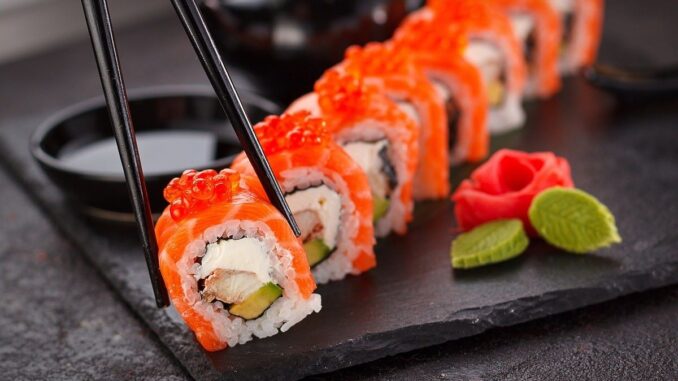
For example, in items like uramaki, where ingredients are rolled inside-out with rice on the outside, even slight inconsistencies in roll tightness or ingredient balance can affect presentation and texture. Additionally, collecting structured customer feedback through digital channels or in-store prompts can highlight issues before they escalate. Continuous improvement should be part of the scaling plan with data used to refine processes and resolve bottlenecks.
Adapt your space for workflow efficiency
Growth often means reconfiguring physical space. Whether it’s expanding your kitchen, opening a centralised prep facility or adding a new service line, the layout must support high-throughput work. Key areas should allow for smooth flow from prep to plating while also separating raw from ready-to-eat zones to comply with hygiene protocols.
Consideration should also be given to equipment placement, power needs, storage and staff movement to minimise delays and maximise output. Thoughtful infrastructure planning makes scale not only possible but sustainable.
Build with scalability in mind
Scaling a sushi business isn’t about rushing to produce more it’s about building a system that supports growth without losing the quality that customers expect. From equipment and staff training to logistics and layout, each element must be designed with efficiency, consistency and long-term sustainability in mind. By addressing these essentials early, sushi restaurants can expand with confidence and control.
Image by Kevin Petit from Pixabay
Be the first to comment