

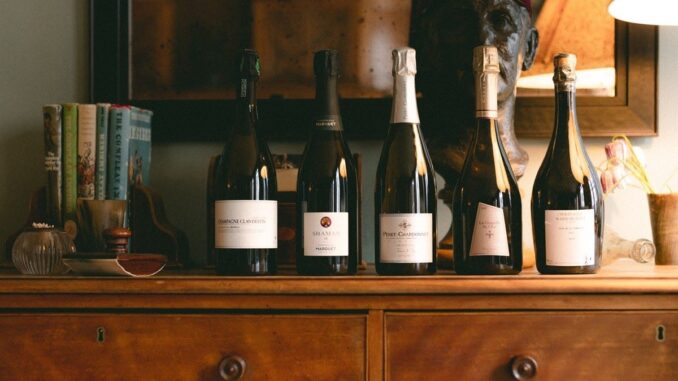
Last month, for the first time, Berry Bros. and Rudd organised a special tasting dedicated entirely to their exceptional collection of artisanal Champagne to celebrate autumn, and where a group of us got the opportunity to meet 14 of the producers behind these grower-led, terroir-driven wines.
Held in the impressive Napoleon Cellar at No.3 St James’s Street, we got the chance to taste a wide variety of styles that included steely Blanc de Blancs and complex vintage cuvées from producers of Champagnes made with precision and personality, only made in small quantities by family domaines and who have captured the imagination of collectors and connoisseurs alike.
Champagne is experiencing the current changing climate very acutely, which of course brings its challenges, but it also creates opportunities with an increased division between the vignerons who are responding correctly to the changes and those who are not. As a result, better wines are being made from the carefully managed, more resilient vines. At the core of the Champagne psyche is sustainability, which is something Berry Bros. & Rudd support with the increasing biodynamic, organic and sustainable farming methods many of their artisan’s practice.
The producers we met embody a generational shift in Champagne winemaking that are today led by a terroir-driven philosophy. While blending sites, grapes and vintages is still paramount in the region, artisanal Champagnes have shifted their focus to multiple different winemaking approaches and styles.
Berry Bros. & Rudd believe that these smaller producers are creating the most exciting wines and this selection of 14 growers represents the very pinnacle of artisanal production.
-
Champagne Marguet
Blending heritage with radical innovation, Champagne Marguet has been making Champagne in the Grand Cru village of Ambonnay since 1870. Today, under the vision of Benoît Marguet, the estate has become a benchmark for biodynamic viticulture and terroir-driven expression, producing some of Champagne’s most sought-after wines, bringing along five Champaignes for us to try including a Shaman 22, Grand Cru, Zero Dosage which is 84% Pinot Noir and 16% Chardonnay, a Shaman Rosé 22, Grand Cru, Zero Dosage, a 2020 Les Crayères, a Grand Cru Lieu-Dit D’ambonnay, a 2020 La Grande Ruelle, Blanc De Noirs, Grand Cru, Ambonnay Brut Nature and a 2017 Sapience, Premier Cru, Zero Dosage.
-
Champagne Frédéric Savart
Champagne Savart can be found in the Montagne de Reims region and is known for its artisanal approach. As a relatively small estate, it focusses on high-quality, limited-production Champagnes. Their vineyards are located in the villages of Écueil and Villers-aux-Noeuds, where the chalky soils and cool climate contribute to the wines’ distinctive minerality and freshness and brought a NV Le Mesnil Sur Oger, Grand Cru, Extra Brut for us to try.
-
Champagne Roger Coulon
There have been nine generations of Roger Coulon since its inception in 1805 and it has arguably the finest terroirs in La Petit Montagne with Pinot Meunier being their speciality thanks to its vineyards being located on sandy soils where the grapes thrive. We got the opportunity to try four of their Champagnes including a L’Hommée (60% Chardonnay and 40% Pinot Noir) an Esprit De Vrigny, a 2014 Blanc De Noirs, Extra Brut, Franc Pied and a 2018 Les Hauts Partas.
-
Champagne Jules Brochet
Located in Taissy, in the Montagne de Reims, the estate focuses on non-interventionist practices in the vineyard and winery. The vineyard’s overall style is reductive, with a slight oxidation to their Champagnes. Pierric Brochet is still developing his range, however the bread and-butter cuvées are his Prémices, as well as the Solera-style cuvée, Autochome, and brought a non-vintage 2022 Prémices, Extra Brut for us to try, which is 60% Pinot and 40% Chardonnay.
-
Champagne Madeleine Brochet
I really enjoyed meeting Madeleine Brochet, who, together with her brother, only produces a cuvée in the very best vintages. Located across 3.5 hectares in Taissy and Dizy, they work on low intervention principles with no filtration, chapitalisation or stabilisation. The Champagnes the winery produce have a slight oxidative twist but are very precise and linear. This was Madeleine’s first Champagne, a 2020 Madeleine Brochet which is 50% Pinot Noir and 50% Chardonnay and was produced using only old oak barrels.
-
Champagne Crété Chamberlin
Champagne Crété Chamberlin is also very much a family affair headed up by Mathieu and Blandine Crété, siblings and 15th-generation winemaker. The family’s aim is to create terroir-focused wines of outstanding precision and authenticity. Located in Moussy, the winery spans eight hectares of 88 plots spread across 11 villages which means that is covers an incredible diversity of terroirs. Each plot is vinified separately to maintain its unique nuances and all the wines are created with minimal intervention and use no chemicals or unnecessary sulphur. They brought three Champagnes that included a 2018 Crété Chamberlin, CBD Grand Cru, a 2018 Mazaux, Premier Cru, Vertus and a 2019 Crété Chamberlin, Eclipsis.
-
Champagne Lafalise-Froissart
Champagne Lafalise-Froissart produces some of the best Pinot Noir in the Montagne de Reims. This sixth generation family-run winery produces terroir-focused, elegant and precise wines. The approach is low intervention with the estate being organic and biodynamic certified. These limited quantity Champagnes (around 3,000 to 3,500 bottles) are for those in the know and we had the opportunity to try four of them, including the 2021 Cuvée 108, Grand Cru, Extra Brut, which is 100% Chardonnay, the 2021 Cuvée 045, Verzenay, Grand Cru, Extra Brut, the 2021 Cuvée 276, Blanc De Noirs, Verzenay, Grand Cru, Extra Brut and the 2021 Cuvée 791, Dizy, Premier Cru, Extra Brut which is also 100% Chardonnay.
-
Champagne Waris Hubert
Champagne Waris Hubert is run by Olivier Waris, his wife Stephanie and their three children. The family have a long history of farming in the area but only started making Champagne in 1998. Their 18 hectares are all organic and as relative newcomers to the region, they have not been bound by the constraints of market expectations or legacy. As a result, they have experimented with slow cold fermentations, low sulphur use and extended lees ageing to create an artisan range of Champagnes that are richly textured and expressive. We got to try four of them, including a Lilyale, Blanc De Blancs, Grand Cru, Zero Dosage, a 2018 Blanche, Blanc De Blancs, Avize, Grand Cru, Extra Brut, a 2017 Sophos, Blanc De Blancs, Avize, Grand Cru, Extra Brut and a 2016 Annexä, Aÿ, Grand Cru, Zero Dosage.
-
Champagne Matthieu Godmé
Tucked away high up in the northeastern corner of the Montagne de Reims, Matthieu Godmé’s was started by Matthieu’s great-grandparents and is moving it towards a more artisanal approach with the main focus being the health of the soil and maintaining biodiversity in the vineyards. Matthieu brought with him a V.V.V, a V.V.V Rosé, a Terre De Villers-Marmery, Premier Cru, and a Terre De Verzy, Grand Cru.
-
Champagne Odyssée 319
Champagne Odyssée 319 is a recent venture between Olivier Bonville, the fourth generation of Champagne Franck Bonville and his son-in-law Ferdinand Ruelle, with the aim of making Champagne from each of the region’s 319 villages and producing one new cuvée each year. They brought with them an Avize Grand Cru, Brut, Blanc De Blancs a 2020 Avize, Le Levant Blanc De Blancs, which is 100% Chardonnay and one of my favourites of the afternoon, a 2020 Avize, Le Couchant Blanc De Blancs, which is also 100% Chardonnay and a 2021 Jour 4, Pinot Noir Et Chardonnay Mareuil-Sur-AŸ which is 65% Pinot Noir and 35% Chardonnay.
-
Champagne Franck Bonville
One of the region’s most renowned growers, Champagne Franck Bonville has made identity-driven Côte des Blancs Champagnes since the 1930s. It has remained in the Bonville family’s hands across four generations and manage 15 hectares of Chardonnay vineyards across a number of villages, producing only Blanc de Blancs Champagnes. They brought three of them for us to try including a 2018 Pur Avize, which is 100% Chardonnay and exceptionally smooth, a 2018 Pur Oger and a 2018 Pur Mesnil producing only 2,000 bottles.
-
Champagne Siret
Thomas Siret is part of a long line of Champagne vignerons, learning from his father, who worked for the likes of Krug and Piper-Heidsieck, before launching his own venture in 2013 and now produces four different cuvées. He brought along three for us to try including a Réserve Perpétuelle, a 2013 Grand Cru Blanc De Blancs and a 2020 Rosé De Saignée.
-
Champagne Clandestin
Clandestin was started by Bertrand Gautherot of Vouette et Sorbée and Benoît Doussot, a Burgundian winemaker, who together produce very limited quantities of the most terroir-expressive Champagnes you can get. The grapes are sustainably grown, sourced from eight hectares and brought four of their Champagnes for us to try including a 2022 Boréal, Brut Nature, a 2022 Austral, Brut Nature, a 2022 Les Passagers, Haut De Val Barmont and a 2022 Les Passagers, Fiole, Brut Nature.
-
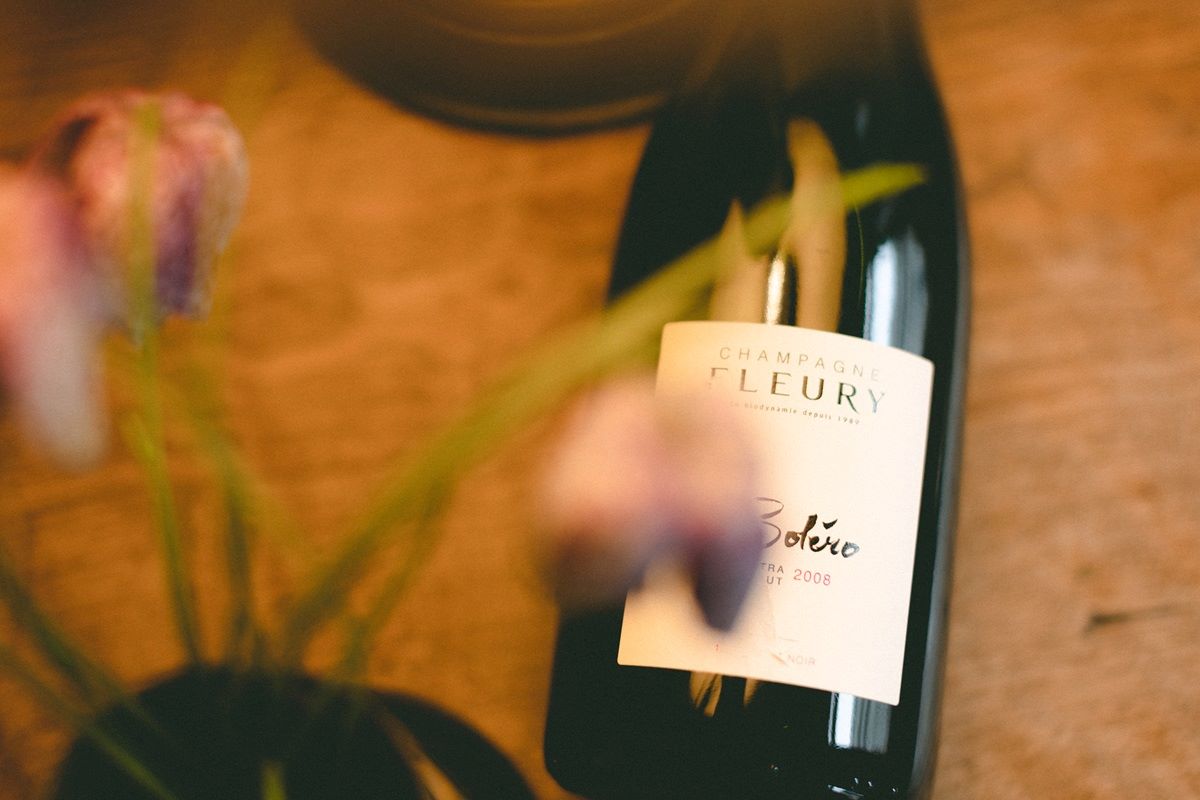
Champagne Fleury
Last and by no means least, Champagne Fleury has remained a family winery for over 125 years and was one of Champagne’s first pioneers of biodynamics, priding itself on personifying the “art of being natural”. Fleury’s wines have a distinctive quality and balance an ethereal purity of fruit with an earthy sense of place. The four Champagnes they brought with them included a non-vintage 2020/21 Blanc De Noirs, a vintage 2017 Cépage Blanc Brut Nature (89% Chardonnay and 11% Pinot Noir), a 2018 Notes Blanches (90% Chardonnay and 10% Pinot Noir) and a 2020 Millésime (20% Chardonnay and 80% Pinot Noir), made with a mix of old and new barrels and 10 years on the lees. It was probably my favourite Champagne of the afternoon and the perfect note to end on.
For more information on Berry Bros. and Rudd’s artisan Champagnes, please visit: www.bbr.com.
Author Bio:
Simon Burrell is a UK-based travel and motoring journalist and editor, a former member of The British Guild of Travel Writers and professional photographer.
Photographs courtesy of Berry Bros. & Rudd


Be the first to comment