

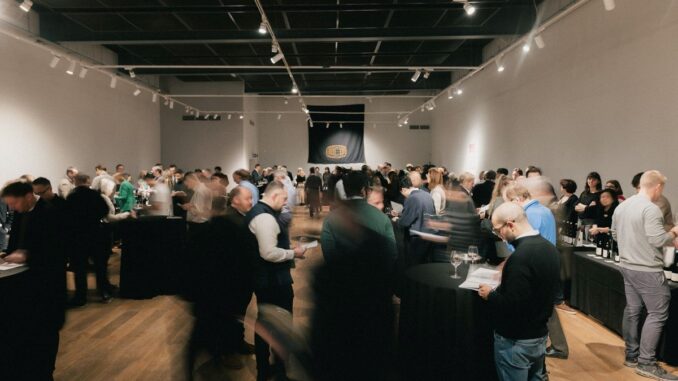
A few weeks ago, Berry Bros. & Rudd held their annual Burgundy tasting at the Mall Galleries in London, just a stone’s throw from their home at No.3 St James’s Street, featuring just over 50 of the region’s top producers with all of the key sub-regions and villages represented on the day.
Unfortunately, though for the producers, the 2024 crop was a historically small one. The growers faced a multitude of challenges in their vineyards, with many saying that it was their most difficult growing season ever.
However, the small quantities of wine that has been produced is well worth exploring, as the whites are possibly the best in a decade, while the reds are classically Burgundian, being delicate, elegant and extremely delicate.
What does it mean when you buy En Primeur?
In a nutshell is means that you are buying a wine straight from the producer before it’s even been bottled. This system originally started in Bordeaux but has now been adopted in Burgundy, the Rhône Valley and even now in Italy.
What are the benefits?
Well, the benefit of purchasing wines En Primeur means that you are able to secure a price that is exclusive of Duty and VAT. This means that you won’t have to pay any tax until you actually withdraw them.
Due to ageing requirements and local laws differing across different regions, the wines are normally shipped out from the producers anywhere between eight to 18 months after the vintage, depending on the region.
How does En Primeur work?
Firstly, when you purchase these wines, they are still with the producer and usually in casks. When ready, the producer will bottle and ship them to you. Then when the wines arrive in the UK, they will be stored In Bond, meaning that no UK Duty and VAT has been paid on them yet. You will then only pay Duty and VAT when you withdraw the wines.
2024 Burgundy Vintage
The 2024 vintage sees a return to classic Burgundy. In other words, you can expect modest alcohol, bright acidity and cool fruit flavours. The crop was tiny and some of the smallest ever seen for some growers. But whilst the volumes are extremely limited, these are pure, energetic and delicious wines. The whites are perhaps some of the best in a decade while the reds are the very essence of elegant Burgundian Pinot Noir.
This is of course a reminder that climate change does not simply mean long, hot summers but also extreme weather patterns. In 2024, this translated into extended rainfall and lower-than-average sunshine making it a challenging vintage. That said, it was still possible to make good and very good wines for both short and medium-term drinking.
Chablis
The first selection of wines we tasted were from Chablis, which is further north than the rest of Burgundy and about halfway between Beaune and Paris. The wines are exclusively whites from Chardonnay and differ in style from other white Burgundies, offering more steeliness and flintiness.
There were seven producers from this region that included Domaine Pinson, Domaine Sébastien Dampt, Domaine Gilbert Picq & Fils, Domaine 47°N 3°E, Domaine Eleni et Edouard Vocoret, Domaine William Fèvre and Samuel Billaud.
The Mâconnais
The Mâconnais is located below the Côte Chalonnaise, overlapping with the northern part of Beaujolais and is mostly white wine country and is now among Burgundy’s most dynamic.
There were four producers representing this region, including Domaine de la Soufrandière, Les Héritiers du Comte Lafon, Olivier Merlin and Château des Quarts.
Côte de Beaune
The Côte de Beaune is the southern part of the Côte d’Or and includes the villages of Meursault, Puligny-Montrachet and Chassagne-Montrachet, all of which are the heartland of Chardonnay and home to most of Burgundy’s white Grands Crus. You will also find the Hill of Corton here, where mostly red wines are produced.
We got the opportunity to try wines from 22 producers in the Côte de Beaune region. They included Benjamin Leroux, David Moreau, Domaine Bitouzet-Prieur, Domaine Comte Armand, Camille Giroud, Domaine de Montille, Domaine Denis Carré, Domaine François Buffet, Domaine Jean-Marc Boillot, Domaine Jean-Noël Gagnard, Domaine Michel Bouzereau et Fils, Domaine Patrick Javillier, Domaine Rollin Père et Fils, Domaine Simon Colin, Guillaume Lafon, Domaine Jean-Claude Bachelet, Jean-Philippe Fichet, Maison Joseph Drouhin, Domaine Michel Niellon, Domaine Marc Colin et Ses Fils and Olivier Leflaive and Domaine Jacques Carillon.
Côte de Nuits
The Côte de Nuits forms the northern half of the Côte d’Or and runs south from Dijon to Nuits-St Georges. This is largely red wine country where you will find most of Burgundy’s red Grands Crus and the best Premiers Crus located on the middle of the region’s slopes.
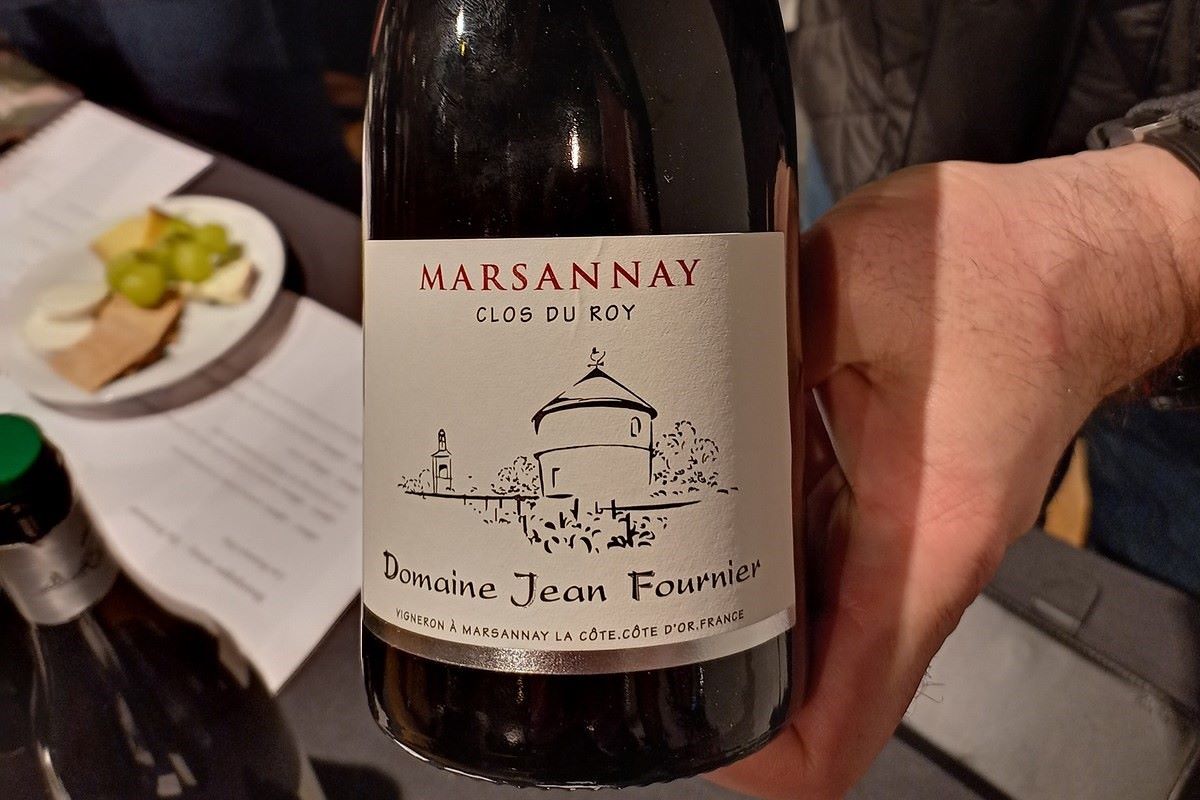
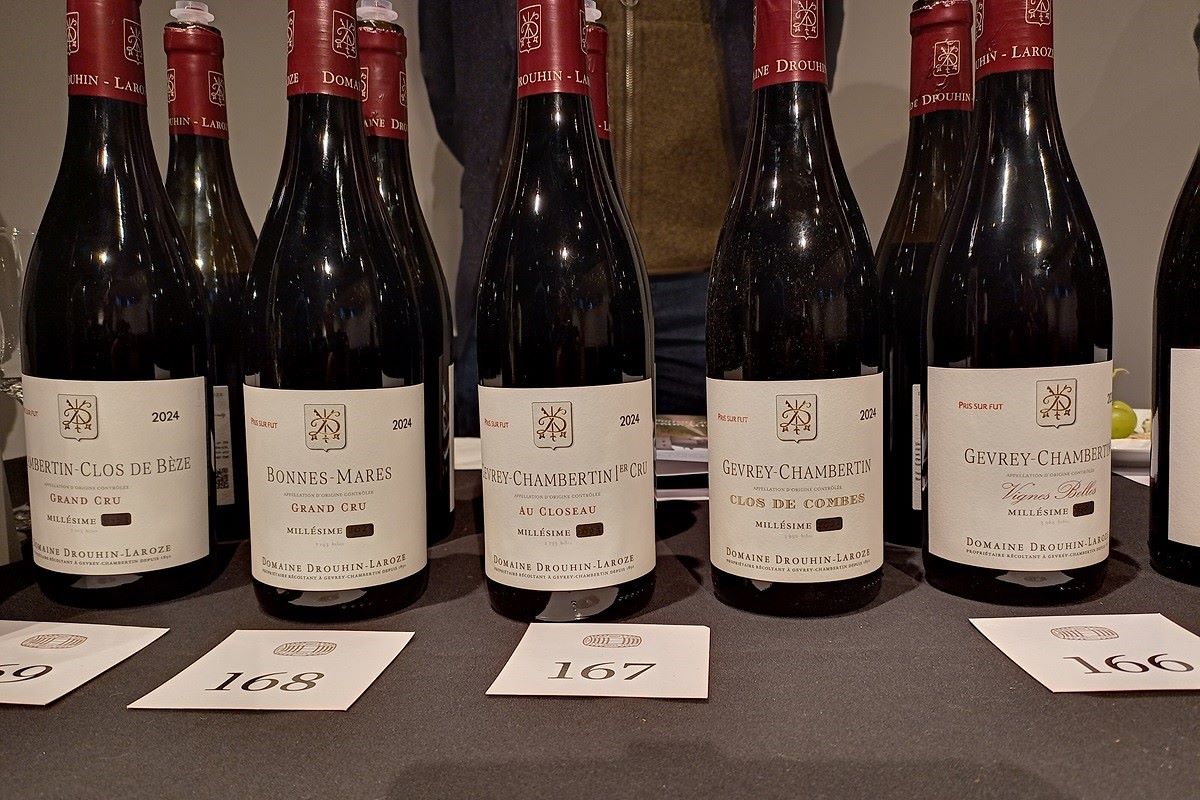
In total, 17 producers brought a wide variety of their 2024 wines for us to try, including Domaine Castagnier, Domaine de la Vougeraie, Domaine Ghislaine Barthod, Louis Boillot et Fils, Domaine Jean-Pierre Guyon, Domaine Faiveley, Domaine Lignier-Michelot, Domaine Jean Grivot, Domaine Michèle et Patrice Rion, Domaine Rossignol-Trapet, Domaine Sérafin Père & Fils, Domaine Méo-Camuzet, Domaine Tawse, Thibault Liger-Belair, Maison Gautheron d’Anost, Domaine Drouhin-Laroze and lastly Domaine Jean Fournier.
Getting the opportunity to taste some of these superb wines is a real treat and if you are in the market for some rather exceptional French wines then a visit to Berry Bros. & Rudd’s Wine Shop on Pall Mall is well worth it before they run out.
For more information on Burgundy 2024 En Primeur and to purchase any of these wines, please visit: www.bbr.com.
Author Bio:
Simon Burrell is a UK-based travel and motoring journalist and editor, a former member of The British Guild of Travel Writers and professional photographer.
Photographs courtesy of Berry Bros. and Rudd and by Simon Burrell

Be the first to comment