
Lick your lips if you are planning to visit Edinburgh. It is a Gastronaut’s dream. You will eat royally and learn to know your way around a gourmet haggis.
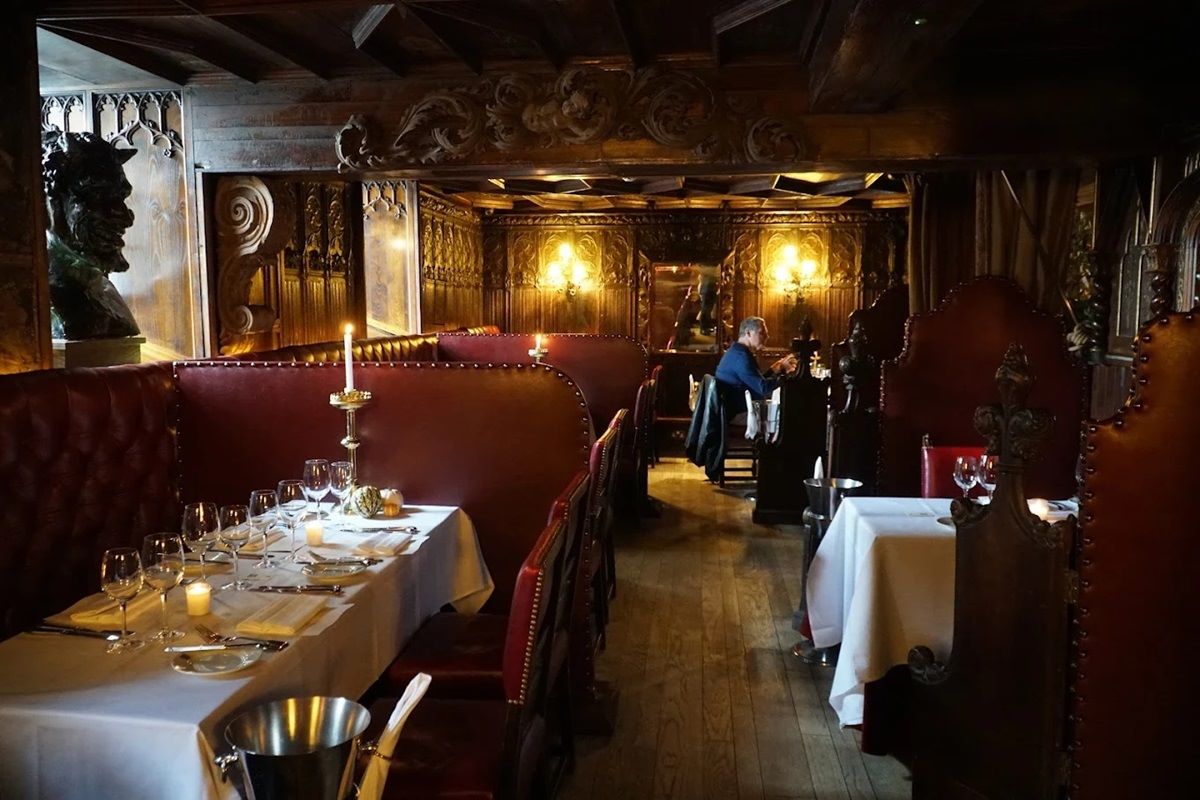
Chef Douglas Roberts at Edinburgh’s self-declared “most famous restaurant” at The Witchery on the Royal Mile, offers loin of Balmoral Estate red deer with celeriac, winter truffle purée, grilled king oyster mushroom, pomme fondant and queen kale and smoked Scottish salmon with leek fondue, crab, samphire, cucumber and bergamot.
As well as classics like Lobster Thermidor, Tournedos Rossini and Omelette Arnold Bennett, smoked haddock, cream and cheese, finished under a grill for a browned, bubbly top. As created in 1929 at London’s Savoy for the English novelist.
As well as having a very popular Brunch Club, chef Eliot of The Spence at the Gleneagles Townhouse has an à la carte menu comprising Shetland cod, Lord Melfont trout, Tweed Valley sirloin steak and Scottish Borders hogget – meat from a sheep older than one year and under two.
With a £185 10-course and 5-7 course tasting menu, the Lyla specialises in “maximum seasonality and sustainably caught fish and shellfish”.
From Sunday roast at the Waffle & Duck in the city’s St James Quarter to chef Dylan Pinder’s Moss in St Stephen Street’s Vegetarian Tour of Scotland (which includes hay ice cream), Auld Reekie is crammed with top-quality, award-winning, Michelin-feted restaurants.
“Old Smoky” originates from the 16th and 17th centuries when smoke from wood and coal fires polluted the city. “Athens of the North” is another nickname from its role in the Scottish Enlightenment and neoclassical architecture.
Eating in Edinburgh is always unforgettable, if sometimes messy. Dulse, which has restaurants in the West End and Leith, provides you with gloves and a bib to tackle its £45 Seafood Boil.
Many of Edinburgh’s chefs are making names for themselves. Chef Rodney Wages moved to California from Kansas to work at The French Laundry. His San Francisco pop-up became the Avery Restaurant, named after painter Milton Avery.
Rodney won his first Michelin star for the restaurant in 2021, and the Edinburgh Avery features wood pigeon haggis.
The Scots are proud of the bounty of their natural larder and their powers of hospitality. Both are abundantly showcased in the heart of Edinburgh by Mathew Sherry, the Executive Chef of Number Restaurant Balmoral on Princes Street (named after Prince George, Duke of Rothesay, later King George IV), next to the city’s Waverley Railway Station and the Gothic, 287-step 1838 Sir Walter Scott monument. It’s also just around the corner from the National Gallery. It’s a prestigious address, historically and gastronomically.
The menu features Scotland’s finest produce and suppliers including Ullapool brown crab, West Coast langoustines, Denhead Farm Coupar Angus asparagus and the Balmoral’s homegrown honey made by bees fed on gorse from Arthur’s Seat (an ancient extinct volcano forming most of the city’s Holyrood Park).
Number One is in Edinburgh’s most iconic hotel, The Balmoral. Opening in 1997, the name was inspired by The Balmoral’s prime address, 1 Princes Street.
Number One currently holds four AA Rosettes, is Michelin Guide recommended and included in La Liste Top 1000, a listing of the world’s best restaurants.
Staying in a city, especially arriving late in one, exhausted and hungry, there is nothing better than not having very far to go for dinner. The shorter distance to the entrées and the feel of a menu in your hands, the better.
Afterwards, you want a speedy, sub-minute, complimentary ride not a 10-minute expensive taxi. As feelings you can do without go, none is worse than following a good meal having to return to your hotel in an Uber with suspension problems driven by a driver with mental health and/or personal hygiene problems.
There’s nothing worse than paying good money for dinner and then being thrown around in the back of a minicab with Orkney hand-dived scallops, crème brûlée and unnaturalized stomach acids swirling around on spin-cycle inside you and every corner you go around, making you regret all those Perthshire potatoes, the artisanal cheeseboard and all that non-Scottish wine.
Hopetoun estate game and Pittenweem fish travel much better in a lift. As long as your table-to-bed journey doesn’t last longer than four floors.
Similarly, there is no better feeling in the morning than waking up and realising you haven’t got far to go for a peerless kipper. And the shops are literally over the road.
The Balmoral and The Witchery are the places to stay. The latter is less conservative. With suite names like Inner Sanctum, The Vestry, The Turret, The Guard Room that include a Gothic clutter of tartan, armour, silk, velvet, candlesticks and ecclesiastical and military regalia.
In 1895 William Hamilton Beattie won a competition to design a hotel for the Great Northern Railway adjacent to the newly completed Waverley Station named after Scott’s Waverley novels series (1814-1832). It opened as the North British Railway Hotel in 1902. The site was previously the location of pharmacists who supplied Dr. James Young Simpson with the first chloroform anaesthetic which became indispensable in childbirth.
While under railway ownership, the British Hotel (The N.B.) was known for its porters in red jackets who would take passengers and their luggage directly into the hotel via a lift. Now, kilted doormen open and close the front door for you. And the concierge and his unashamedly tweedy bellhop brigade do the rest.
In 1991 the Edinburgh-born actor, the late Sir Sean Connery officially reopened the hotel as The Balmoral, Gaelic for “majestic dwelling”. In 1997 it was acquired by Sir Rocco Forte. It was the first hotel in Scotland to be awarded five stars by Forbes Travel Guide.
Its famous landmark clock is deliberately three minutes fast to give passengers more time to catch their trains. The only day that it shows the correct time is 31st December (Hogmanay), for the city’s equally famous New Year celebrations.
Built as a railway hotel and a Victorian riff on Renaissance architecture and the traditional Scottish baronial style, The Balmoral features sweeping staircases, classical columns and royal icing plasterwork “contemporised” by designer Olga Polizzi. The 168-room hotel’s suites have working fireplaces.
The La Collection Crayères 1989 Jeroboam Experience can also be booked from £2,500, which is a unique opportunity to enjoy a Jeroboam (3 litre bottle) of 1989 Charles Heidsieck Champagne matched with either menu.
This experience can be included as part of a private champagne and N25 caviar tasting between the cellar and private dining room.
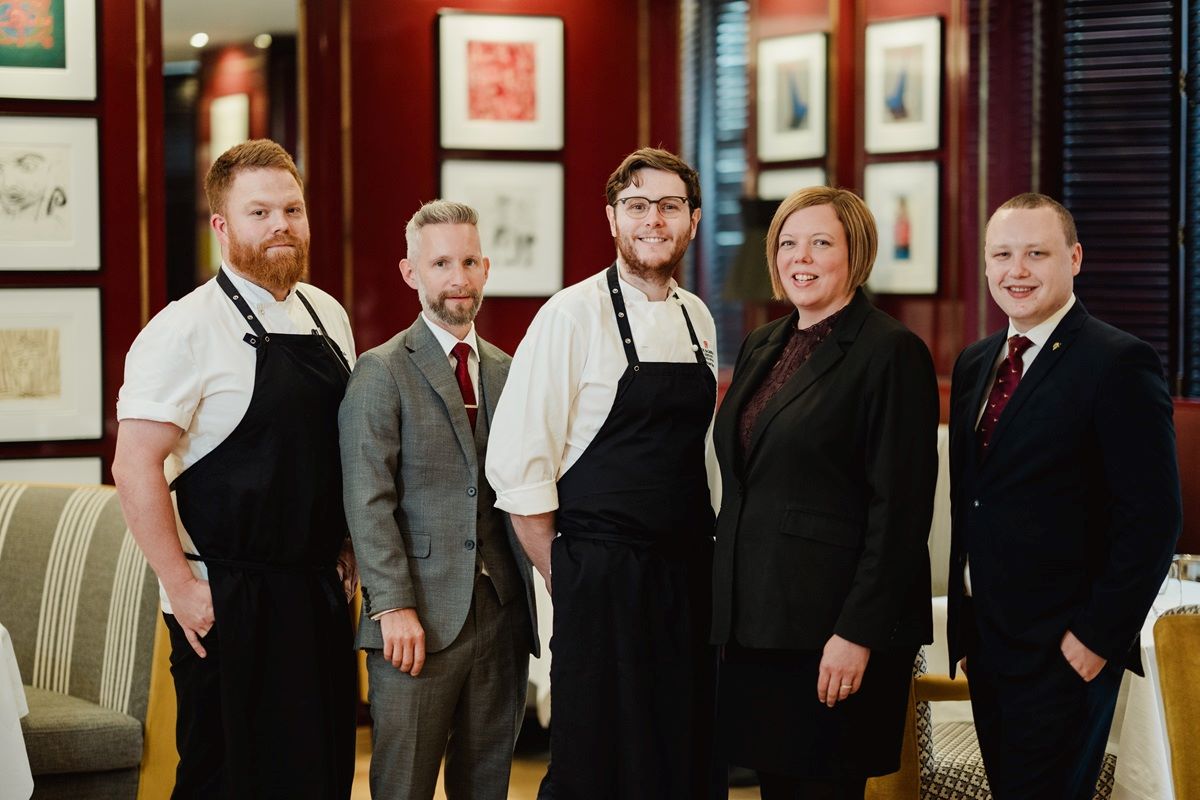
Chef de cuisine Mathew Sherry worked with Chef Dominic Jack at the former Michelin-starred Castle Terrace, before spending several years as head chef at Northcote with executive chef Lisa Goodwin-Allen. Restaurant manager Emma Hemy was awarded Restaurant Manager of the Year in 2021, and sommelier Callum McCann was recently included in the Top 5 UK Young Sommeliers.
Every luxury hotel now seems to have a spa but how many have a tailor to help you design your own tartan, a “scent butler” or poet-in-residence ready to knock out a few lines to immortalise your stay? And Sherry’s local larder, an ode to his sea buckthorn meringue and even a paean to the elevator to your bedroom.
Serenaded by a harpist in the Balmoral’s Palm Court, you can choose from an extensive selection of 88 loose-leaf teas poured tableside. The classic afternoon tea includes savouries like pea and mint cheesecake, a seasonal sandwich selection, scones with Balmoral jam and pastries such as passion fruit and dark chocolate madeleines.
Lyla is also “a restaurant with rooms”. And Edinburgh’s smaller, less formal eating places are just as good. Nadair in the southside is the first restaurant by chef partners Alan Keery and Sarah Baldry. Adopting the Scottish Gaelic for ‘nature’, they offer an ever-changing five-course tasting menu paired with organic wines and foraged-based cocktails.
Also, in Marchmont, Pomelo is run by Jun Au whose specialities include ripped noodles, kumquat roasted duck, aubergine gong poo, crispy gochujang chicken sandwich and a vegan Buddha Bowl.
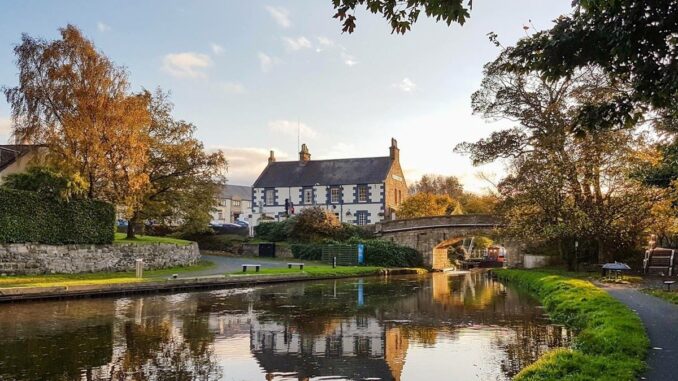
The Bridge Inn, Ratho is a short ride from the city centre (Edinburgh Gateway) and 10 minutes from the airport. The four-bedroom Union canal side restaurant features homemade pies, roasts, Scottish pancake and cullen skink (haddock, potato broth).
Eating your away around Edinburgh, you will realise you can never get sick or enough of haggis, East Neuk lobster, Tarbert crab, terrines of grouse, mallard and partridge, hand-dives scallops or rumps of Borders lamb. Although for some, hay ice cream and cullen skink will remain acquired tastes.
Author Bio:
Kevin Pilley is a former professional cricketer and chief staff writer of PUNCH magazine. His humour, travel, food and drink work appear worldwide, and he has been published in over 800 titles.


Be the first to comment