

Looking for a quieter side of New Delhi? Mark Nicholls discovers a leafy aspect to India’s vibrant capital.
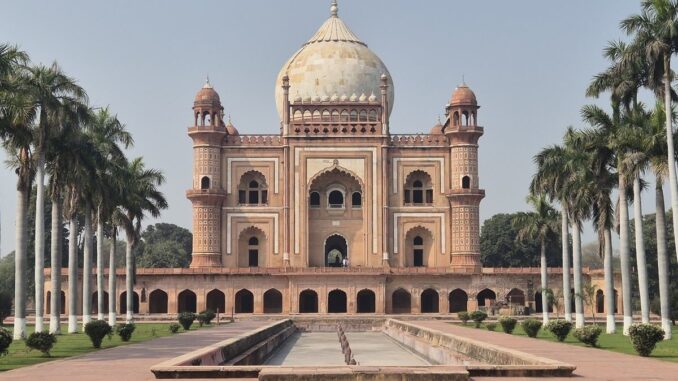
At the end of an avenue of palm trees, on a raised platform in an expansive walled garden, lies a building of immaculate symmetry. It is the tomb of Safdarjung.
While it may not be the finest example of Mughal architecture in terms of splendour or have the ornate inlay of semi-precious stones that traditionally adorn the tombs of the great Emperors, it retains an ambience like few others.
Leafy district
Standing in a green and leafy suburb of New Delhi, it was built in 1754 of red sandstone and marble at a time that the power, influence and wealth of the Mughal empire was on the wane.
However, many classic Mughal architectural features remain such as the reflection pools, four gardens in the Chahar Bagh style, onion domes, turrets and raised platforms.
And what Safdarjung’s tomb lacks in fine detail, it makes up for in its setting – a haven of tranquillity centred on a monument that has the space to breathe and tell its story.
High walls cocoon it from the outside clamour of a busy city with the palm trees adding to the ambience in the lovingly tended gardens.
Atmospheric tomb
I love the brash crowded streets and bazaars of Delhi, blaring traffic horns and constant shouts of hawkers trying to sell trinkets and souvenirs, but the city does have its quieter, greener façade.
That is what I had gone in search of when I came across the wonderfully atmospheric tomb of Safdarjung.
He was the Nawab of Oudh, a powerful noble who became Prime Minister when Ahmed Shah Bahadur ascended the Mughal throne in 1748, long after the era of mighty rulers such as Akbar, Shah Jahan and Aurangzeb.
It was, however, a turbulent period for the fading Mughals and when Ahmed Shah Bahadur was deposed, Safdarjung was forced to return to Oudh where he died in October 1754.
His mausoleum – built by his son Shuja ud-daula who was the third Nawab of Oudh – was the last great Mughal garden tomb.
In its peaceful setting today, it is easy to spend an hour or two away from crowds and absorb the ambience of an empire in decline.
Lodi Gardens
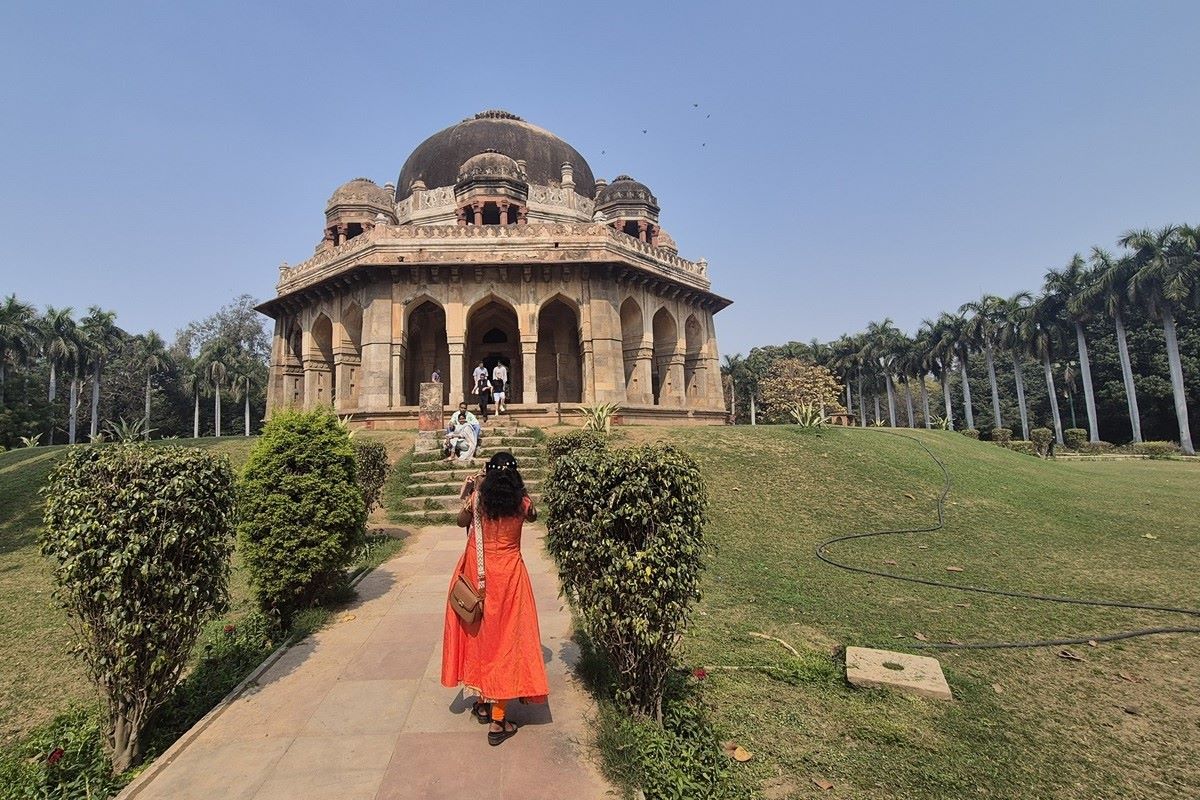
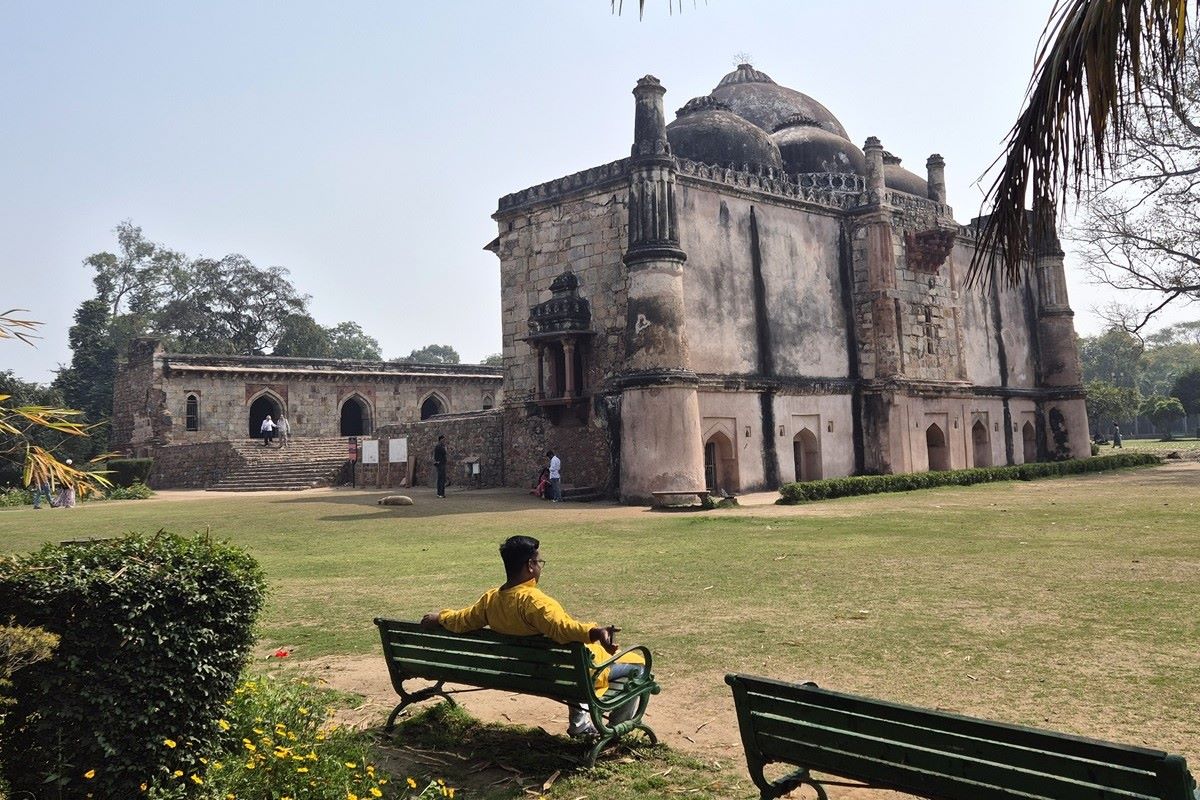
A short walk away is the Lodi Gardens. Beneath overhanging trees, this is where the young hang out with their friends, teenagers take their girlfriends to pose in front of jaded monuments and local citizens go for a lunchtime wander.
The Bada Gumbad and Shisha Gumbad are beautifully silent tombs, while grander and rising above a mound is the imposing mausoleum of Mohammed Shah IV who was the third monarch of the Sayyid Dynasty and ruler of the Delhi Sultanate from 1434 to 1443. Nearby is the tomb of Sikander Lodi and the Athpula bridge across the lake.
These are the final resting places of some of Delhi’s forgotten rulers, but their monuments live on in the green splendour of this 90-acre public garden in the suburbs of the Indian capital.
Trendy Hauz Khas
The more relaxed side of Delhi is not too difficult to find. A popular community is Hauz Khas, a short Metro ride away from the busy areas of Paharganj, Connaught Place or the crowded alleys of Old Delhi.
Here lies the trendiness of a suburban village with art galleries, boutique shops, bars, cafés and restaurants, and a lake bordered by yet another series of 14th century tombs and madrassa, mosques, mausoleums, pleasure pavilions and monuments.
HKV has become a popular abbreviation – Hauz Khas Village – with its narrow streets and side alleys overlooking the water.
Noble tank
Hauz Khas translates as noble tank and was the 13th century lake built by Sultan Ala-ud-din Khilji to supply his citadel.
The watery environ thrives with birdlife as monkeys leap around the perimeter path, joggers dodge sleeping dogs and parakeets argue in the trees.
The ruins overlooking this include the tomb built by Firoz Shah ahead of his death in 1388, the neighbouring madrassa and the remnants of other Islamic monuments.
HKV has an irresistible array of places to eat, several with impressive views over the lake, as well as bars for a refreshing beer or a masala chai and coffee in a street café.
If you have time, retrace your way out of HKV and cut into the Deer Park where paths flow beneath the trees and every so often you stumble across more mausoleums and monuments, again forgotten but quietly loved.
Mughal masterpiece
While Safdarjung’s Tomb, in my opinion, is one of the most mesmerising buildings in Delhi and one that has an irrefutable place in the history of Mughal architecture, it is located a relatively short distance from a structure that set the tone for the golden era of Islamic architecture.
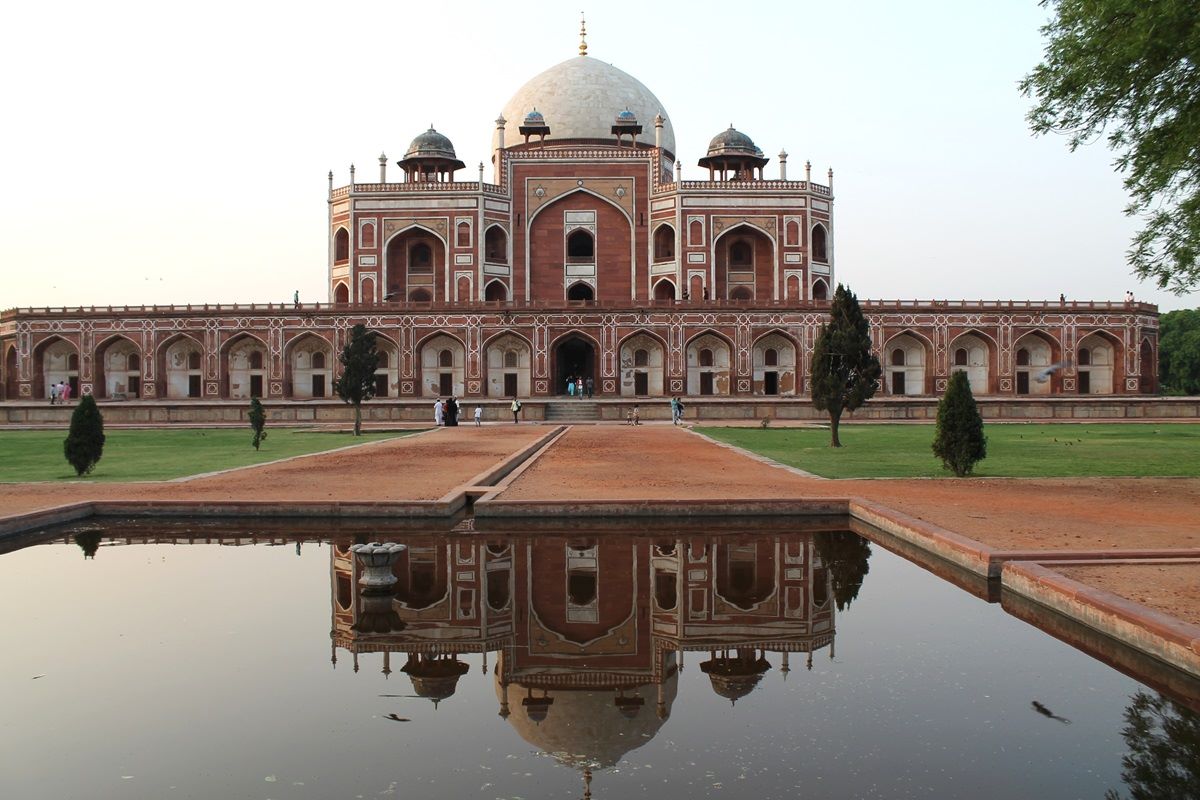
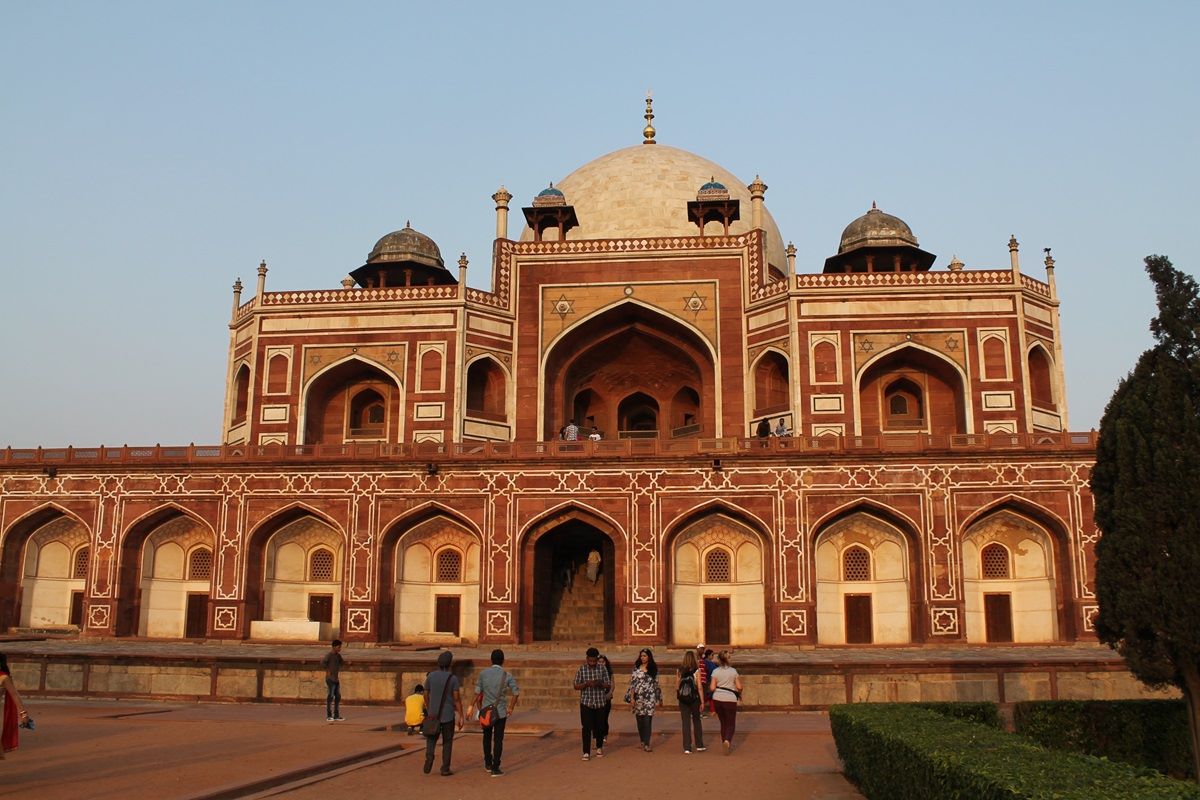
Humayun’s tomb is an early jewel in the Mughal crown, a wonderful mausoleum set amid the quartered Chahar Bagh gardens, which represent the four gardens and four rivers of Paradise from the Quran.
Built two centuries before Safdarjung’s tomb with marble white domes underpinned by the hallmark red sandstone, it is a masterpiece of early Mughal architecture.
Architectural blueprint
As emperor, Humayun had a troubled reign. After succeeding his father Babur in 1530, he was deposed in 1540 but regained the crown in 1555 to establish a dynasty that ruled much of India until the early 18th century.
India owes much to his mausoleum, constructed on his death in 1556. Its legacy was the Taj Mahal, which drew on Humayun’s tomb as a blueprint for the finest of all Mughal mausoleums.
Once you get away from the frenetic streets, the Indian capital has no shortage of green, quiet and leafy suburbs to visit, where monuments sit amid idyllic gardens in their own timeless oasis of peace.
Fact Box:
Getting there: For Hauz Khas take the Metro to Green Park or Hauz Khas on the Yellow or Magenta lines. For Safdarjung (which sits at the intersection of Safdarjung Road and Aurobindo Marg), take the Metro to Jor Bagh. And for Humayun’s Tomb it’s the Pink line to Sarai Khal Khan-Nizamuddin and then a short walk.
Admission: There is an entrance fee to Safdarjung’s tomb, Humayun’s tomb and the Hauz Khas monuments but you can walk around the Lodi Gardens for free.
Top tip: You can also seek out the green open space around the India Gate monument, walking down Kartavya Path (formerly Rajpath) from the Presidential Palace. But once you’ve enjoyed Delhi’s greenery and the wonderful gardens, don’t leave without allowing the city to jolt your senses. Visit the vibrant side of Old Delhi with the Jama Masjid (the country’s largest mosque which can hold 25,000 worshippers), the Chandni Chowk bazaars and the Red Fort or the backpacker haunts of Paharganj near New Delhi Railway Station.
Looking for somewhere to stay: Try The Metropolitan Hotel & Spa on Bangla Sahib Road near Connaught Place.
Author Bio:
Mark Nicholls is an award-winning freelance travel writer and author, based in the UK and has written for a range of national titles, specialist magazines and international websites and operated as a war correspondent in locations such as Iraq and Afghanistan.
Photographs by Mark Nicholls


Be the first to comment