

An unfamiliar town centre can make even a short journey feel complicated. The distance is small, yet there may be several lanes, pedestrians approaching crossings, buses pulling away and signs that need reading early. For a learner driver, the challenge is often deciding which information matters first while continuing to control the car smoothly.
That makes town driving a useful part of learning, provided the difficulty matches the learner’s stage. The aim is not to remember every turning in advance. It is to develop a repeatable way of observing, planning and responding when a road does not look exactly as expected.
Separate the route from the driving task
Knowing where you want to go and deciding how to drive safely are connected but they are not the same job. A navigation instruction may suggest the next turn. It cannot remove the need to read current signs, judge traffic or respond to someone crossing the road. Temporary restrictions and changed road layouts can also make an old mental picture unreliable.
Discuss the broad route with your instructor before moving off. It can help to know that the lesson includes a busy shopping area or a larger junction without rehearsing every action. This gives you a framework while leaving the actual decisions tied to what you see. If your instructor is providing directions, agree how much notice and explanation you currently need.
For learners looking at driving lessons in Kingston, a useful training plan can connect residential practice with the demands of a busier town environment. Ask how lessons introduce unfamiliar roads and build independent decisions. Those skills will remain useful when you visit a different town and no longer recognise the landmarks.
Read the road early enough to keep options open
Town centre problems often become harder when useful information is noticed late. A lane marking seen well ahead allows time to understand it. The same marking noticed beside the bonnet may tempt a rushed response. Looking ahead while continuing the necessary checks around you give both your instructor and you more time to deal with developing situations.
This is about selecting information rather than trying to stare at everything. A pedestrian near a crossing, a parked delivery vehicle and a change in lane direction may all matter but their importance develops as you approach. Your instructor can talk through how to identify the next likely demand and keep enough time and space to respond.
Avoid treating the vehicle in front as a substitute for your own observations. Its driver may be taking a different route or making a poor decision. Likewise, a familiar looking road does not prove that the restrictions match a road you used last week. Signs and markings at the actual location remain central to the decision.
Make room for people whose movements are less predictable
Busy shopping streets bring different road users close together. Someone carrying bags may be looking for a crossing. A cyclist may need to move around an obstruction. A bus may obscure a person waiting near the kerb. Learning to recognise these possibilities give you more useful preparation than assuming everyone will move exactly as you expect.
The Highway Code sets out responsibilities when turning, including giving way to pedestrians crossing or waiting to cross the road into which or from which you are turning. Applying such rules requires attention to the whole situation not just finding a gap between cars. Review any rule you are uncertain about with your instructor outside the demands of a busy manoeuvre.
Patience is part of the skill. Other drivers may appear impatient when a learner takes time to assess a situation. Their reaction does not make an unsafe gap suitable or remove a pedestrian’s priority. Focus on the decision in front of you and the guidance your instructor is giving rather than trying to satisfy the person behind.
Practise recovering from a missed turn
A missed direction can feel disproportionately important when you are learning. It may trigger an urge to change lanes suddenly or turn from an unsuitable position. Agree beforehand that keeping the manoeuvre safe comes first. Continue according to the road layout and let the instructor help you find a suitable way to rejoin the route.
Being able to recover calmly is a useful real world skill. Roadworks, a closed car park or a misunderstood direction can alter any journey. During suitable lessons your instructor can help you practise managing that change without allowing navigation frustration to take over the driving task.
Once safely parked after the session, review one unfamiliar situation in detail. What information became available? When did you notice it? Which part of the decision needed support? A simple sketch can make the discussion easier without turning the lesson into a catalogue of faults.
Use familiar skills in a different setting
After a demanding town drive, it can help to identify the parts that were already familiar. You may have used the same observation routine, speed judgement and preparation that you practised on quieter roads. The surroundings added demands, but you were not learning every component from the beginning. Ask your instructor which existing habits held up well and which became less consistent when your attention was divided.
Choose a useful next step from that discussion. Perhaps you need another supported drive through a similar area or a simpler session concentrating on one decision that became rushed. Repeating the busiest route immediately is not always the most helpful response. A short period of focused practice can give you a clearer method to bring back to the harder situation.
Keep comparisons specific when the route changes again. A different town may have unfamiliar signs or junction shapes while requiring a decision you have practised before. The question is how you recognised the information and used it, rather than whether the surroundings felt comfortable straight away. Discuss that distinction after the drive when there is time to think. It helps turn one local lesson into preparation for future journeys without encouraging you to rely on memory instead of the road in front of you.
Town driving becomes more manageable as these habits work together. Early observation creates time, a sensible plan preserves options, and a calm response keeps a small route change from becoming a rushed manoeuvre. Familiarity with one town can help you begin but a sound method is what allows you to drive beyond it.
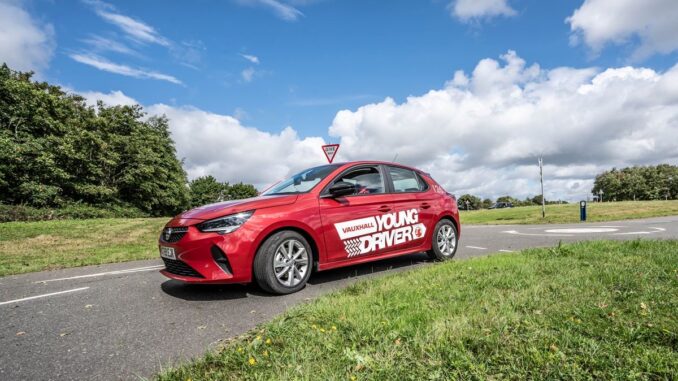
Photograph courtesy of Young Driver



Be the first to comment