A Black Russian takes on a different meaning and taste if you use Ukrainian vodka or “horilka” to make it and a Bloody Mary becomes more of a statement if you make it with beetroot rather than tomato juice. And a Cape Codder is different from what you might be used to if you mix cranberry juice with the 16th century recipe Neminoff Honey Pepper Vodka.
To make a White Ukrainian you will need 50ml Dima’s Vodka, 25ml Coffee Liqueur (Kahlua) and 25ml Double Cream and a pinch of nutmeg. Add the vodka and coffee liqueur into the glass with ice and float some cream on top from the back of a spoon.
All you need to do is to get the toasts right. “Budmo!” which means “Let us be!” is not enough. You need a lot more.
Traditionally, in Ukraine, the first toast is usually proposed by the host (“za zustrich”). The second glass is usually raised for friends (“za druziv”) and the third toast is for women (“za zhinok”). The last toast of the evening is always “Na Konya!” which translated mean “on the horse”). It is the Ukrainian equivalent of “one for the road” and comes from the time when the Cossacks would have had a last drink before galloping away. Usually with pickle on their breath as a Ukrainian vodka drink should always be accompanied by a pickle.
Since Russian troops invaded Ukraine, UK-based Dima Deinega has been using his premium vodka brand Dima’s to fundraise for his homeland while also campaigning for its culture and the people. The brand launched in 2020.
“I’ve always wanted to get involved with helping the country, promoting it in a positive light. I always wanted to make something that highlighted both Ukraine and its culture as well as the actual vodka making. Dima’s has changed from being a commercial business to effectively being a fundraising avenue.”
The brand donates £1 (US$6.33) per bottle of Dima’s vodka and £5 for every copy of its “Budmo! Cocktails From Ukraine” book sold. The money goes to providing first aid kits in Ukraine.
Artist Kateryna Kyslitska has hand-painted limited-edition bottles of Dima’s Vodka with sunflowers, Ukraine’s national flower.
Born in Kyiv but raised in the UK, Deinega spent childhood holidays helping out at his father’s Irish pub – the oldest pub in Ukraine. After graduating from Cambridge, he worked in natural resources consultancy for global business advisory firm FTI before deciding to introduced Ukrainian vodka to the world.
Production began at a 126-year-old distillery west of Kyiv. It took Dima 38 recipes to perfect the flavour profile, which has a subtle nuttiness, cereal earthiness, notes of bread and biscuit and vanilla sweetness. The vodka is made from wheat, rye and barley. As Deinega says:
“Ukraine boasts a third of the world’s nutrient-rich, fertile black soil, known as ‘chernozem’, which lends its grain extra depth of flavour and complexity.
“It is triple distilled in 700l column stills, then filtered through sand to remove impurities and charcoal to soften and enhance the mouthfeel. Before it undergoes column filtration, it’s filtered through sand for a second time then rested for a week to allow the flavours to settle and integrate before bottling.”
Ukrainian vodka has become a symbol of hope, defiance and resilience.
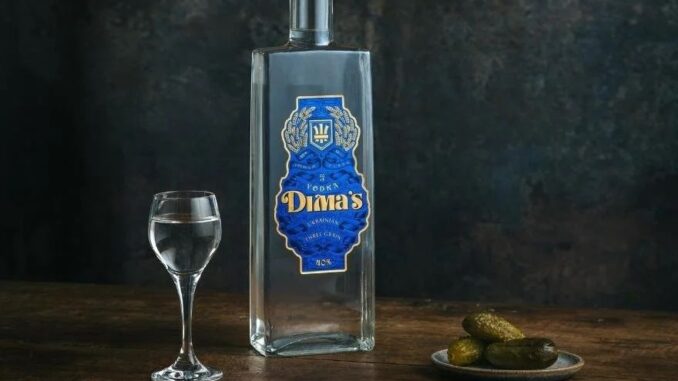
The Dimas bottle features a modern riff on the Ukrainian coat of arms – a blue shield with a gold trident, the tryzub insignia is derived from the trident of Vladimir the Great, the first Grand Prince of Kyiv. The prongs symbolise the three grains that go into the vodka, while the electric blue and gold on the label are a regal take on the colours of the Ukrainian flag. The gold detailing is inspired by the Kyiv skyline and the golden shimmer of the city’s stunning monasteries and churches.
Deinega added dark blue swirls to the label in homage to the traditional vyshyvanka shirts worn throughout Ukraine, which vary from region to region.
Hetman Elite Vodka, another Ukrainian product, is a culmination of centuries of distilling mastery. It is distilled, triple filtered and blended with mineral water sourced from the heart of Ukraine’s Carpathian Mountains. The lion on the bottle symbolises the city of Lviv. The right side depicts the Hetman, a recognised military leader and politician. The crown in the centre of the coat of arms is a heraldic sign of dignity and the ears of grain around it symbolise the hard work and peacefulness of the Ukrainian people. Hetman also makes Morosha.
Stravitsky Leitsky vodka also comes from Lviv. Nemiroff is based in the Vinnytsia region. Svitlo premium vodka is produced in Cherkasy along the Dnipro River.
The seven-times, birch and charcoal filtrated, gluten-free Khor vodka is made at the Khotytsa Distillery in aporizhzha.
Hlibny Dar and Zirkova is owned by the Bayadera Group and produced in the National Horilka Company factory in Stepanky. Its Dar range is made through the distillation of fermented cereal grains. Rye Luxury is made from rye crackers, cinnamon and cumin and Khlibnyi Dar from an infusion of wheat crackers. Lunin makes apple, plum and acacia vodkas.
And finally, to make an authentic Ukrainian Beetroot Mary you will need 50ml Dima’s Vodka, 3 dashes of Worcestershire sauce, 3 dashes of Tabasco (adjust for extra spice), half a teaspoon of horseradish, 5-10ml Pickle Brine, a pinch of salt, a pinch of pepper, 20ml Beetroot Juice and the top with some Tomato Juice. Simply build all the ingredients into a highball glass, garnish with a sprig of dill and, of course a slice of pickle. You can then start the toasts!
A 70cl bottle of Dima’s Vodka is priced at £35.00 and available from www.dimasvodka.com.
Author Bio:
Kevin Pilley is a former professional cricketer and chief staff writer of PUNCH magazine. His humour, travel, food and drink work appear worldwide, and he has been published in over 800 titles.
Photograph courtesy of Dima’s Vodka

Be the first to comment