

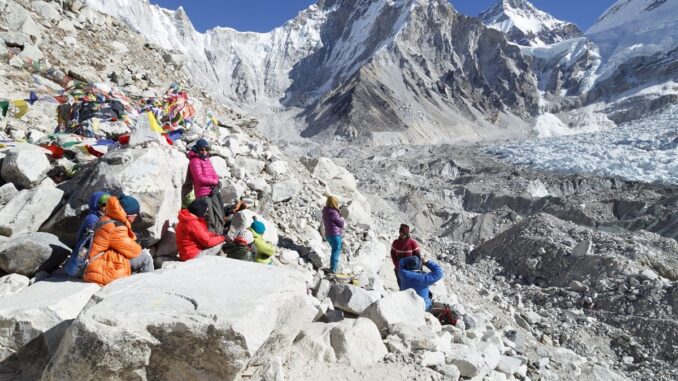
Nepal’s Himalayan adventures fall into two broad categories: trekking routes and peak expeditions. Classic treks such as the Everest Base Camp Trek, Annapurna Base Camp Trek, Annapurna Circuit Trek and Manaslu Circuit Trek follow established trails between villages, teahouses, mountain passes and spectacular viewpoints. They require endurance, proper acclimatisation planning and the ability to hike for several consecutive days in changing mountain conditions.
Mountaineering expeditions, whether on Mera Peak, Island Peak, Ama Dablam, Manaslu or Mount Everest, require those same foundations, along with mountaineering skills or a guided program that provides technical instruction and support. Even trekking peaks are not simply longer hikes. Glacier travel, crampons, ice axes, fixed ropes and exposed summit ridges may all be part of the climb.
The Himalayas do not reward vague plans. They require an honest match between your experience, fitness, altitude tolerance and the objective you choose. A scenic trek can still involve cold nights, long climbs, disrupted flights and limited medical access. A peak climb adds technical terrain, fixed ropes and a much narrower margin for poor preparation.
Overall, your choice should reflect what you can safely manage not just the summit photo you want.
Best treks for first-time Himalayan travellers
The Poon Hill Trek is a practical introduction for hikers who want grand Annapurna views without sleeping at extreme altitude. It is short, steep in places and still demands good uphill conditioning but its lower elevation reduces the risk profile compared with Everest region routes.
The Mardi Himal Trek is another strong option for fit beginners. Its forest approach and high ridge scenery offer variety, while the upper trail can be cold, narrow and affected by snow in late fall and winter. Expect basic lodges and be prepared for early starts.
For a quieter Everest region alternative, the Pikey Peak Trek delivers broad Himalayan views at a more manageable altitude than Everest Base Camp. It suits travellers who value scenery and cultural villages but do not need the busiest classic route.
Treks for a stronger altitude experience
The Langtang Trek combines easy access from Kathmandu with serious high mountain terrain. It is a good choice for trekkers who have already completed multi-day hikes and want to understand how they respond above 12,000 feet. Adding Kyanjin Ri increases both the reward and the acclimatisation demand.
The Gokyo Lakes Trek is among Nepal’s finest high altitude routes, but it should not be treated as an easy Everest Base Camp substitute. Trekkers sleep high, climb to Gokyo Ri and may cross Cho La Pass if combining Gokyo with Everest Base Camp. This itinerary requires rest days, conservative pacing and a willingness to change plans if altitude symptoms develop.
Nepal treks and peak expeditions: the real difficulty factors
Distance alone does not define the difficulty level of Himalayan adventures. A seven mile day can feel harder than a much longer hike at sea level because of sustained elevation gain, rough stone steps, thin air, cold temperatures and accumulated fatigue. Tea-house trekking reduces the need to carry camping equipment, but it does not remove the physical demands of the trail.
Altitude is the central planning issue. Above roughly 8,000 feet, acclimatisation becomes increasingly important; above 11,500 feet, poor ascent schedules become a common cause of failed treks. Headache, nausea, dizziness, unusual fatigue and poor coordination require attention. Mild symptoms may improve with rest, but worsening symptoms require descent. No fitness level makes a person immune to altitude illness.
For peak expeditions, summit day may begin before midnight and last 10 to 14 hours. You may climb in severe cold while wearing heavy boots, harnesses and technical equipment. Prior experience with crampons and an ice axe is valuable but guided instruction does not replace the need for strong aerobic conditioning and disciplined decision-making.
Plan around season, permits and support
October to November and March to April are generally the most reliable trekking periods. Fall often brings clearer skies and stable conditions. Spring offers warmer temperatures and rhododendron blooms at lower elevations. Both seasons are busy on well-known routes.
Winter can be excellent for lower treks such as Poon Hill or Pikey Peak, provided you accept cold mornings and possible snow. High passes may close due to heavy snow. Monsoon season brings greener landscapes and fewer crowds but cloud, rain and leeches at lower elevations and flight disruption can complicate logistics.
Most major treks require a national park or conservation area permit. Restricted regions require additional documentation and a licensed guide. Peak climbing requires a climbing permit and typically an approved local operator such as Peak Climbing Nepal. Build flexibility into your itinerary for weather, road conditions and Lukla flight delays if travelling in the Everest region.
Train for uphill hiking rather than only flat distance walking. Weekly long hikes, stair climbing, strength work for quads and calves and practice carrying your expected pack weight are more useful than a last minute burst of cardio. Arrange insurance that explicitly covers trekking altitude and helicopter evacuation, then read the policy limits carefully.
Start with the route that fits your current capability, allow extra acclimatisation time and treat turning around as a sound mountain decision rather than a failure.
Photo by Pritam Chhetri from Pexels

Be the first to comment