

Traditionally opera can be stuffy and a wee bit puzzling. But the brilliance of a fresh modern approach means even Puccini’s riddles can be easily solved.
It’s 42 years since Scottish Opera chose Turandot as its premiere production. Back with a bang and in conjunction with Irish National Opera, the masterpiece was wildly applauded by the full house at Edinburgh’s Festival Theatre.
Puccini died before he finished Turandot and composer Franco Alfano used the great man’s notes to complete the works, which director Sir David McVicar has given a new lease of life in the latest showing.
The opera centres on Princess Turandot’s (Trine Møller) riddles, which she sets to test out would be suitors and leads to their horrible death if they are not solved.
Her power means she will only marry a man who gives the right answers to three riddles and the opera starts with the gruesome execution of the unlucky Prince of Persia (Max Burns, voice of prince, Fraser Simpson).
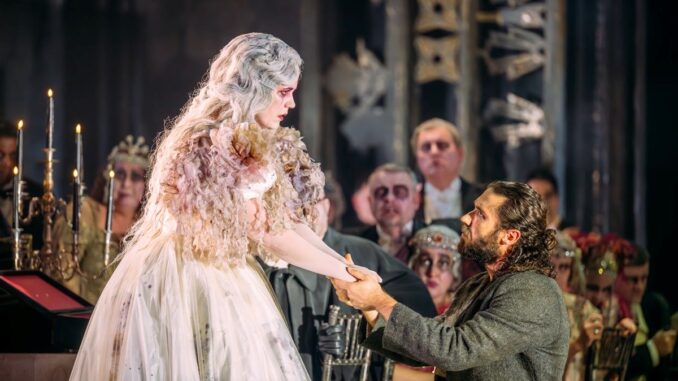
McVicar has abandoned traditional imperial Peking and Chinoiserie and set the opera in the authoritarian, fascist-era Italy of the 1920’s, the decade when the work was composed.
A luxurious set by Charles Edwards, with period costumes by Doey Lüthi, blends decaying Art Deco opulence, fascist symmetry and a dark, disturbing wedding banquet.
And conductor Stuart Stratford makes UK stage history by leading the Scottish Opera orchestra in the rarely heard and full length score by Alfano.
The result is a fantastic spine-chilling opera which has every box ticked to the delight of the enthusiastic audience.
As the wedding guests lounge in their chairs, the Mandarin (Daniel Barrett) announces the cruel fate the Prince of Persia awaits, with executor Pu-Tin-Pao (Jamie Francis) sharpening his knife.
They are joined by an old blind man (Graeme Broadbent) who turns out to be the deposed Timur, former King of Tartary and his helper Liù (Hye-Youn Lee) and they stumble across exiled Tartar prince Calaf (Victor Starsky) who discovers his father Timur is still alive.
Calaf is dazzled by the beauty of Turandot and pledges to answer the riddles in return for her love. Her father, Emperor Altoum (Jamie MacDougall) is weary of his daughter’s bloody tradition and when Calaf successfully solves the puzzles, he insists his daughter must honour her promise.
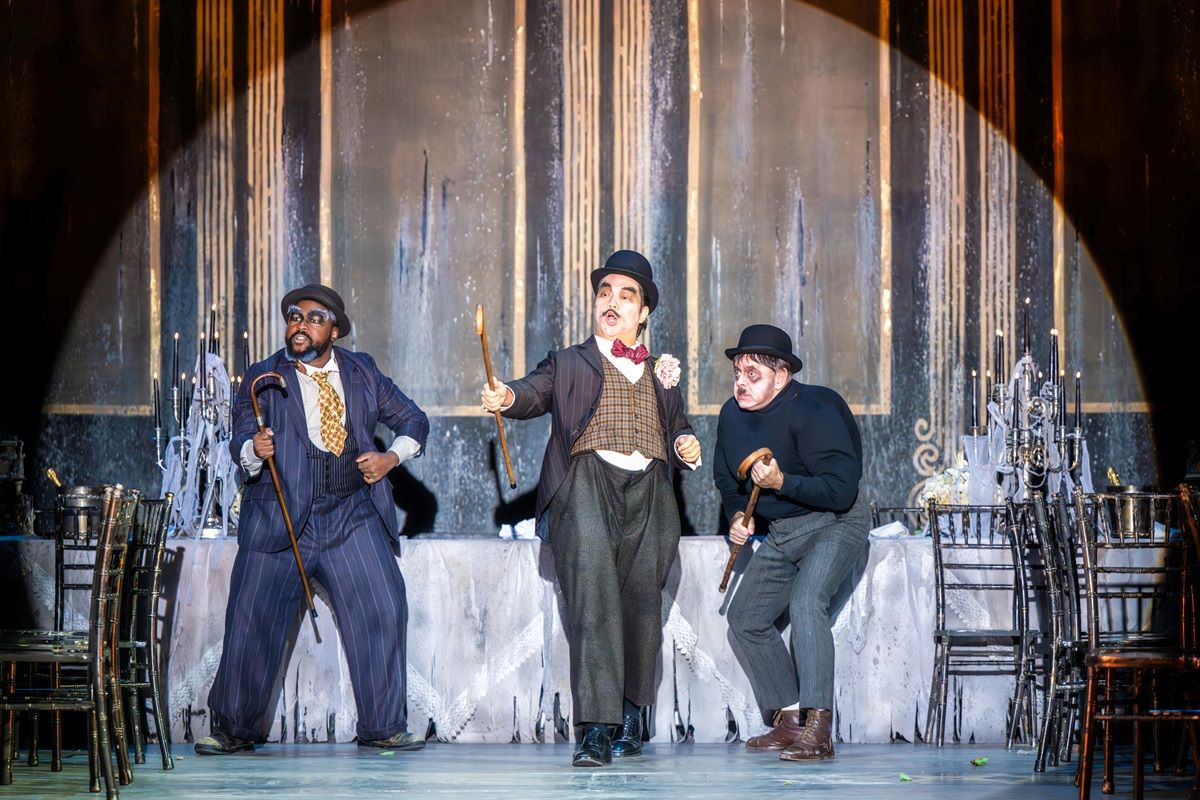
Lighter moments are provided by imperial ministers, Ping (Josef Jeongmeen Ahn), Pang (Aled Hall) and Pong (Luvo Maranti), whose job it is to manage the endless ceremonial rituals and executions. Bored by all the hysteria, they entertain with Laurel and Hardy like comedy as they reminisce about their peaceful country homes away from the palace.
They try unsuccessfully to get Calaf not to take up Turandot’s challenge and when Calaf wins and offers Princess Turandot a let off if she can work out his name, the guards quickly discover Liù and Timur’s connection and threaten to kill the servant unless she helps.
But Liù is secretly in love with Calaf and kills herself. Turandot is haunted by her alter ego ghost (Kirsty Durie) and uncertain what to do now she has lost the challenge but Calaf kisses and melts her icy demeanour and she finally announces to the emperor that the stranger’s name is love.
Highlights of this wonderful opera include the powerful singing of Nessun Dorma by Calaf as he confidently predicts he will win over Princess Turandot and the enthusiasm of the onstage adult singers and off stage children’s choir, directed by Susannah Wapshott.
Choreographer Gareth Mole has the whole opera working brilliantly and there’s gothic sound and lighting from Andy Pink and Ben Pickersgill, ensuring the production is a superb piece of intrigue and passion, with a dash of humour.
Special shout outs to Luvo Maranti (Pong) and Daniel Barrett (Mandarin), who are both part of Scottish Opera’s emerging artists programme which gives talent a chance early in their career to flourish with a period of full time work.
It’s a great initiative, benefiting all aspects of the company’s production – long live opera!
Puccini’s Turandot rounds off with a performance at the Festival Theatre Edinburgh on 19th November at 7:15pm, followed by a 3pm performance on 22nd November 2026 with tickets available via www.scottishopera.org.uk.
Author Bio:
Rebecca Hay is an experienced travel writer and member of The British Guild of Travel Writers. Follow her adventures with her family on Twitter and Instagram @emojiadventurer and on Facebook via EmojiAdventurers2.
Photographs by Mihaela Bodlovic


Be the first to comment