

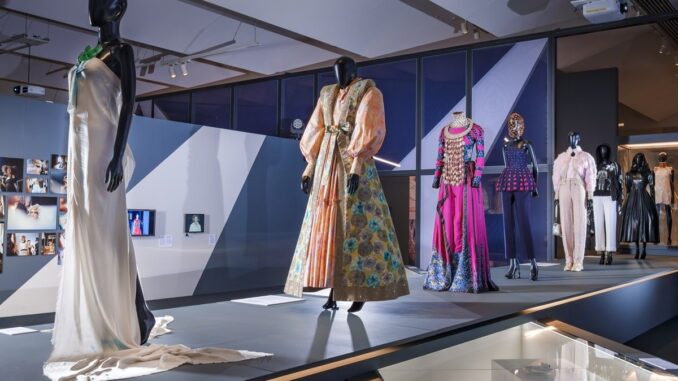
Fashion is big in Dundee. The UK’s first UNESCO City of Design is strutting its stuff with an eye catching exhibition.
Catwalk: The Art of the Fashion Show is at the V&A Dundee until January 2027 and is a coup for the Scottish city as it’s a UK exclusive.
Charting the dramatic evolution of the catwalk from the private salons of the late 19th century to modern day immersive, live-streamed runway experiences, it’s a fabulous must-see.
Beautifully set out at the riverside museum by curators Kirsty Hassard and Svetlana Panova and Jochen Eisenbrand and Katharina Krawczyk from the Vitra Design Museum, the display celebrates the magic, creativity and enduring inspiration that a fashion show creates.
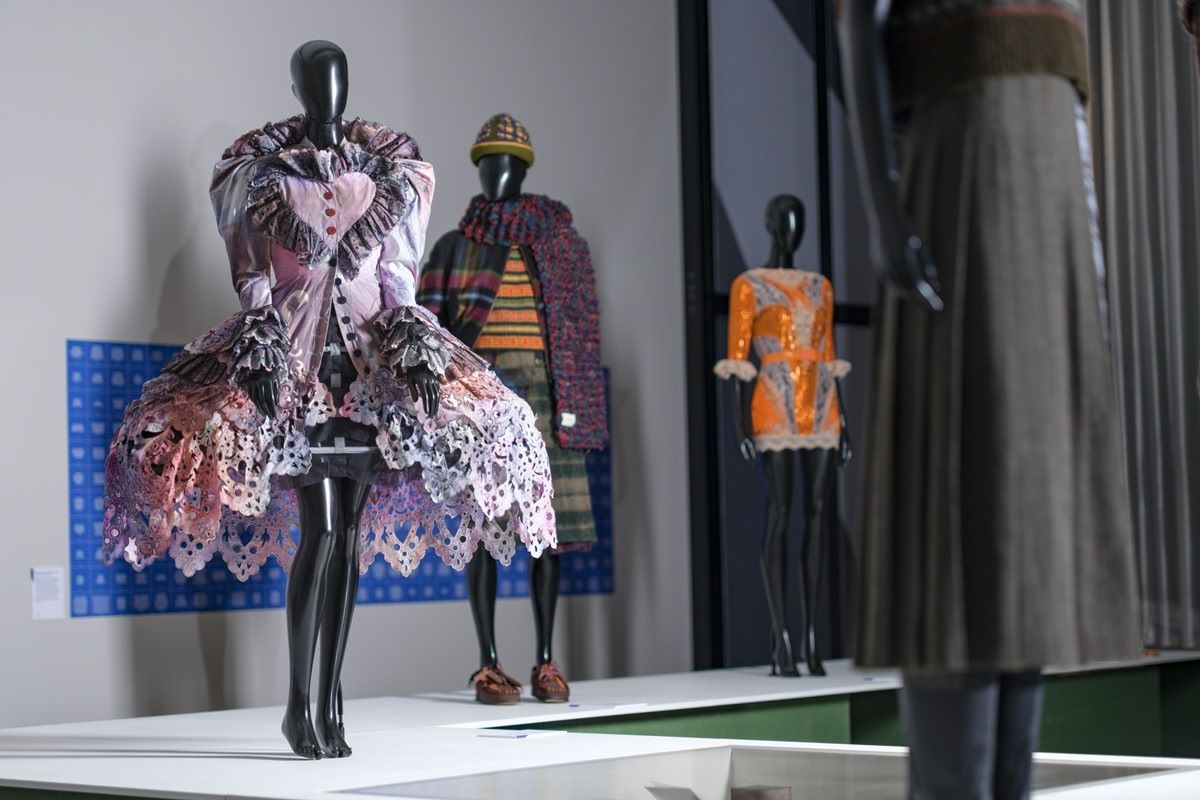
It brings together influential examples of shows created by such fashion giants as Alexander McQueen, Balenciaga, Chanel, Dior, Gucci, Issey Miyake, Louis Vuitton, Maison Martin Margiela, Prada, Paco Rabanne, Yves Saint Laurent and Vivienne Westwood, plus, exclusive to V&A Dundee, original runway looks from Iris van Herpen and Scottish designers Pam Hogg, Christopher Kane, Charles Jeffrey and Nicholas Daley.
With more than 350 objects on display, bringing together fashion looks with footage from the decades along with rarely seen film photography, illustrations and archival treasures, it’s a fascinating see.
One of the highlights is how the designers coped during the Covid pandemic using their brilliant minds to create non-contact fashion shows through special sets and how catwalk invitations have developed from paper to cleverly being incorporated on everything from ceramics, credit card and keyrings. Even Homer Simpson gets in on the act with a collaboration with US online boutique Balenciaga through a special cartoon!
A raised catwalk sits at the heart of the exhibition showing original runway looks from Martin Margiela, Victor & Rolf, John Galliano and Raf Simons for Dior, Karl Lagerfeld for Chanel, Pam Hogg and Alexander McQueen.
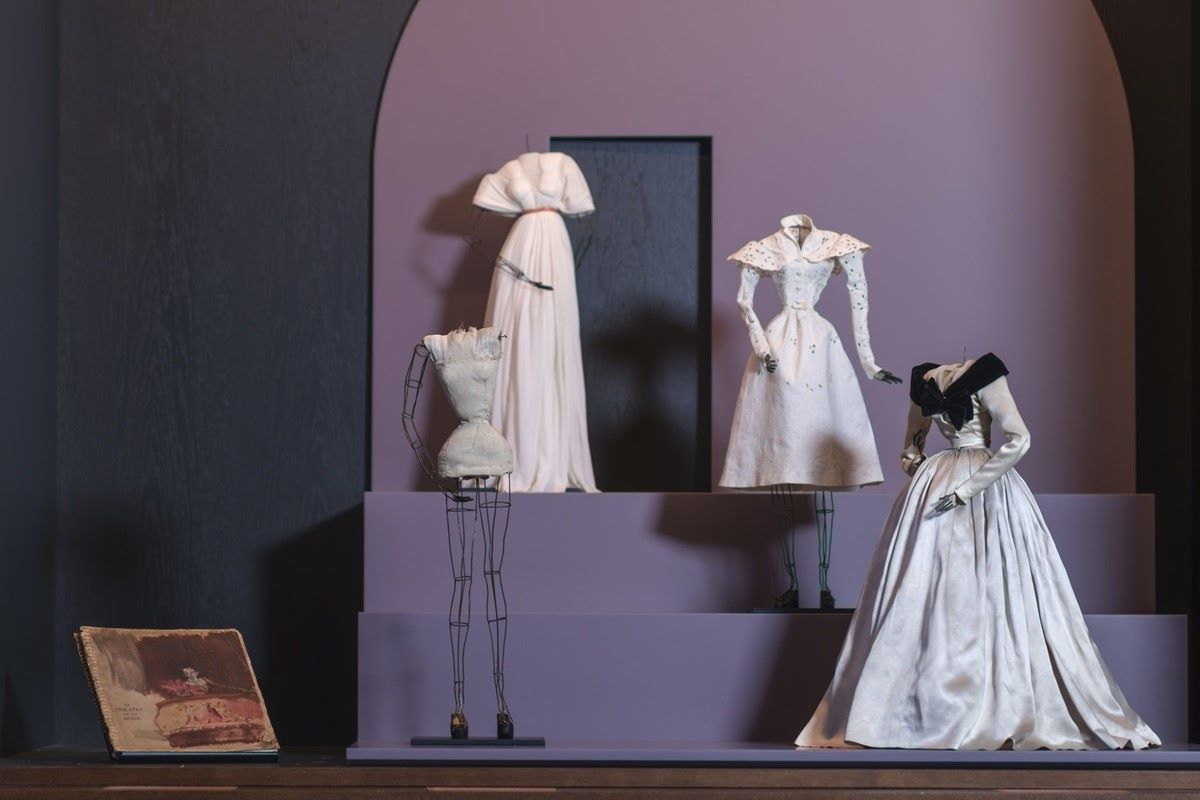
And for the first time in the UK, historic fashion dolls from the Balenciaga archive are on display. Part of Théâtre de la Mode, a 1945 initiative that brought together 40 Parisian designers to create a fashion-show-in-miniature from the Louvre Museum. They stand at 70cm tall and are dressed in Balenciaga couture and played a vital role in reviving the French fashion industry after the Second World War.
One of Scotland’s earliest fashion parades took place in 1938 at the Empire Exhibition in Glasgow and was staged in The Women of the Empire Pavilion, designed by architect Margaret Brodie. The country’s ongoing connection between Scotland and Christian Dior is highlighted with photographs of his first shows in Glasgow and Gleneagles in 1955.
Dior under Maria Grazia Chiuri returned to Scotland in 2024 to host the Mary Queen of Scots inspired Cruise Show at Drummond Castle, Perthshire, weaving the work of Scottish artisans into the collection. On loan from the Chanel archive is the architectural model of Linlithgow Palace used when devising the 2012/2013 Metiers d’Art display, along with the original invitation and looks from the runway.
Celebrating Scotland’s long-standing contribution to the fashion show, both as a location and as a source of inspiration through its landscapes, heritage, history and textiles is the aim. One of Scotland’s earliest fashion parades took place in 1938 at the Empire Exhibition in Glasgow. It was staged in The Women of the Empire Pavilion designed by architect Margaret Brodie.
The exhibition reflects on the ways that clothes, hair, make up, music, the models’ walk, attitude and body image have changed over time, as well as media and technology’s role in shaping the impact and influence of the fashion show.
The exhibition begins in the 19th century when fashion houses such as Worth, Lucile and Paquin began presenting their designs on mannequins in the discreet atmosphere of their London and Paris salons.
In the early 20th century designers like Poiret began to show their work at social events and on international tours to attract new customers. Historical photographs show examples of early fashion shows at horse races and on ocean liners which inspired the cruise collections still shown today. Rare archive film footage brings an early Chanel fashion show to life with models descending down a mirrored spiral staircase in Coco Chanel’s Paris townhouse.
The emergence of youth culture in the 1950s and 1960s prompted a new generation of fashion designers with Chloé and Mary Quant taking their fashion shows out of the salon and into the city. Examples in Catwalk include Mary Quant models dancing to live music and a Missoni show set in a swimming pool. Until the 1960s cameras and sketchbooks were often banned at fashion shows for fear of copying.
By the 1970s, fashion shows had become regular events in New York, London, Milan and Paris. Japanese designers brought fresh perspectives to Paris, challenging Western ideas of style and beauty. Film footage of the 1973 Battle of Versailles fashion show marked the international breakthrough of US fashion. Black models such as Pat Cleveland reshaped the image of the catwalk during this time and fashion shows became performances signalling social change.
TV began to broadcast fashion shows to new and larger audiences in the 1980s, shifting attention from the clothes to the supermodels who wore them, cementing the relationship between fashion and pop culture. A Versace show in 1991, in which supermodels Cindy Crawford, Naomi Campbell, Linda Evangelista and Christy Turlington sang George Michael’s hit Freedom together, became emblematic of this era.
Architectural models, stage props and accessories from the Chanel ‘Supermarket’ and ‘Rocket’ fashion shows in the mid-2000s, conceived by Karl Lagerfeld and staged at The Grand Palais in Paris, reveal in fascinating detail how large-scale shows are imagined and visualised.
The exhibition highlights how fashion shows not only build fantasy worlds but also reflect developments that are currently relevant in society. Alexander McQueen created provocative, theatrical spectacles. In his legendary show No.13, (Spring/Summer 1999) McQueen had two industrial robots spray paint a dress worn by a model live on stage. Viktor & Rolf reflected on growing consumerism in fashion by dressing a model in nine layers in their Russian Doll fashion show (Fall 1999) and Hussein Chalayan addressed social issues through technically sophisticated stagings. Together, they pushed the boundaries of the runway by merging fashion, art and performance.
Catwalk recreates backstage scenes from fashion shows with candid moments captured by renowned fashion photographer Robert Fairer at McQueen, Galliano and Marc Jacobs shows. Essential kits used by make-up artist Val Garland and hair stylist Sam McKnight are on show along with wigs and hairpieces McKnight created for Vivienne Westwood and for the Chanel Métiers d’Art 2012/13 show at Linlithgow Palace. Together, these displays offer a glimpse into how era-defining looks are created.
One of the highlights is the interactive ‘catwalk in a box’, which encourages visitors to try out designing their own fashion show, whilst the ‘magic mirror’ make-up interactive custom-made by Holition, offers an opportunity to try out instant beauty styles from across the decades.
Kirsty Hassard, fashion historian and curator at V&A Dundee, said:
“Catwalk: The Art of the Fashion Show takes visitors on an immersive journey through the history of the catwalk and its changing eras, reflecting the times they are created in. Amongst the many wonderful objects on display, we are thrilled to have worked with the Balenciaga archive to bring the legendary 1945 Théâtre de la Mode fashion dolls to the UK for the first time, celebrating an important moment in fashion show history.
“Scotland’s longstanding contribution to the fashion show is celebrated at V&A Dundee with runway looks from Pam Hogg, Christopher Kane, Charles Jeffrey and Nicholas Daley, along with exhibits from Chanel and Dior fashion shows influenced by and staged in Scotland.”
Leonie Bell, director of V&A Dundee added:
“Catwalk celebrates more than a century of the magic, myths and imaginative worlds of the fashion show. It reveals how these extraordinary, meaningful moments have evolved, highlighting their cultural, economic and social influence despite their fleeting nature. The exhibition takes us behind the scenes to meet the visionary minds, highly skilled designers and the many creative people who make fashion shows so mesmerising. It also reflects on how, alongside the clothes, hair, make-up, music and the models’ walk and attitude, society and its values have shifted – and how media and technology continue to shape the impact and influence of the fashion show.”
Catwalk: The Art of the Fashion Show is at the V&A Dundee until 17th January 2027. For more information, and to book tickets please visit: www.vam.ac.uk
V&A Dundee Members and under 18’s go free and accompanying the exhibition is an illustrated catalogue designed as an A–Z of the Fashion Show.
A catwalk themed afternoon tea is also served in V&A Dundee’s café, Tatha Bar and Kitchen and is open for bookings.
Catwalk: The Art of the Fashion Show is accompanied by a programme of talks, workshops, tours and events that expand on the exhibition’s themes. You can find out more at www.vam.ac.uk/dundee.
Author Bio:
Rebecca Hay is an experienced travel writer and member of The British Guild of Travel Writers. Follow her adventures with her family on Twitter and Instagram @emojiadventurer and on Facebook via EmojiAdventurers2.
Photographs by Grant Anderson courtesy of V&A Dundee


Be the first to comment